
Photo Gallery




In This Guide
- Top Photography Spots
- The Golden Rules of Photography Etiquette
- Recommended Camera Gear
- Seasonal Light Guide
- Festival Photography (Tshechus)
- Pro Tips for Stunning Shots
- Hidden Photography Gems
- Smartphone Photography Tips
- Portrait Photography
- Landscape Composition
- Night & Astrophotography
- Wildlife Photography
- Protecting Your Gear
- Storage & Backup Strategy
- Photographing Daily Life
- Video & Filmmaking
Top Photography Spots
Punakha Dzong
Known as the most beautiful fortress in Bhutan.
Pro Tip: Shoot from across the river at sunrise to capture the white walls and red roofs reflected in the water. In spring (March–May), the jacaranda trees add a stunning lilac frame to your shots.
Tiger's Nest (Taktshang)
The "hero shot" of Bhutan - the most iconic image you'll capture.
Pro Tip: The best light hits the monastery in the afternoon (after 1:00 PM) as it faces west. Morning shots often result in heavy backlighting or deep shadows.
Dochula Pass
On clear winter mornings, you can see the entire snow-capped Himalayan range behind 108 memorial chortens.
Pro Tip: Arrive before sunrise for the best light and fewest tourists. The 108 stupas create stunning leading lines.
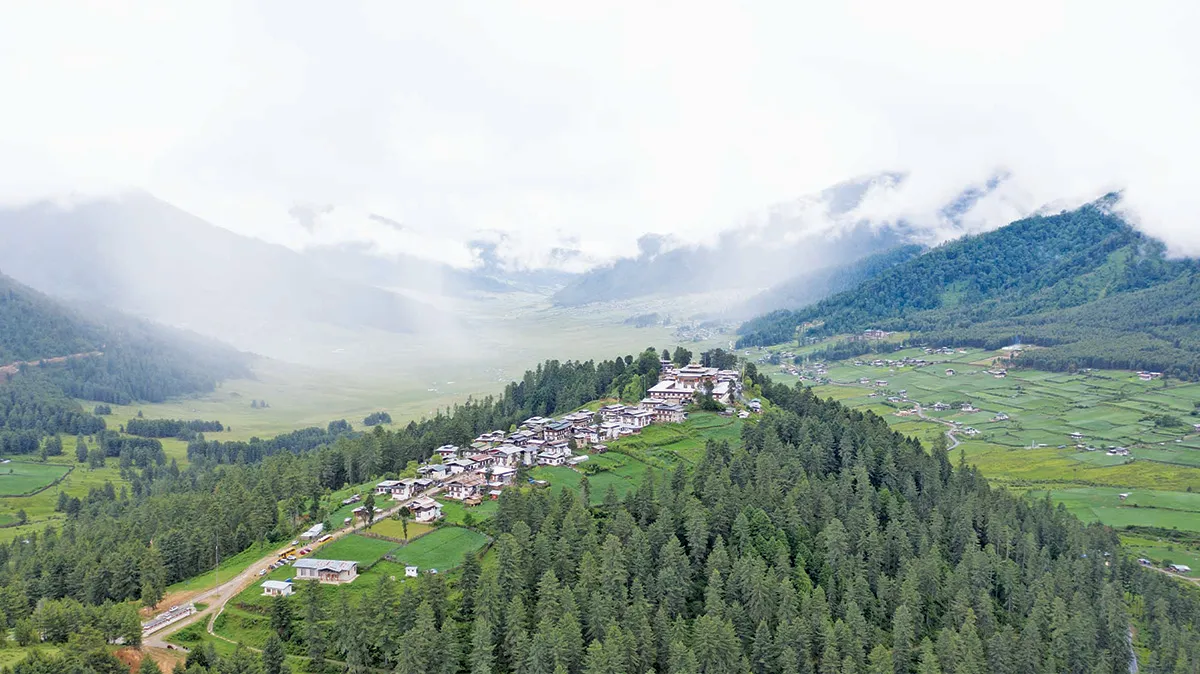
Phobjikha Valley
A wide, glacial valley that feels like a painting. Perfect for wide-angle landscape shots.
Pro Tip: Visit in winter (November–February) to photograph the rare Black-Necked Cranes. The golden hour light across the valley is exceptional.
The Golden Rules of Photography Etiquette
- No Photos Inside Temples: This is the most important rule. You can photograph the courtyards and the exterior of any building, but once you step inside a Lhakhang (temple) or Goemba (monastery), cameras and phones must be put away.
- Ask Before Portraits: Bhutanese people are incredibly friendly, but always ask before taking a close-up portrait. A simple smile and a nod toward your camera is usually enough to get a "yes."
- Drones are Banned: The use of drones by tourists is strictly prohibited in Bhutan to protect the privacy of citizens and the sanctity of religious sites. Bringing one into the country without a government permit can lead to confiscation at the airport.
- Monk Etiquette: While monks in their crimson robes are beautiful subjects, avoid photographing them during active prayer or meditation unless your guide confirms it is okay.
Important Warning
Violating photography rules inside temples can result in being asked to leave and may affect your guide's license. When in doubt, always ask your guide first.
Recommended Camera Gear
| Item | Why You Need It |
|---|---|
| CPL (Circular Polarizer) | Essential for cutting the high-altitude haze and making the blue skies "pop." |
| 70-200mm Lens | Perfect for capturing the details of temple architecture and candid portraits from a respectful distance. |
| Extra Batteries (3-4) | The cold Himalayan air (especially in Thimphu and Phobjikha) drains lithium batteries significantly faster. |
| Fast Prime (35mm or 50mm) | Great for low-light shots in village markets or during festival dances (Tshechus). |
| Wide-Angle (16-35mm) | Ideal for capturing vast valley landscapes and dzong interiors (courtyards only). |
| Rain Cover / Dry Bag | Essential during monsoon season and for protecting gear during river crossings on treks. |
Pro Tips
- Keep batteries warm in your pocket - cold batteries lose charge 30% faster
- Bring a microfiber cloth for condensation when moving between temperatures
- A lightweight tripod is worth the weight for dawn/dusk shots
Seasonal Light Guide
Spring (March–May)
Soft light, hazy horizons, but vibrant floral colors. Rhododendrons bloom in the hills, and jacaranda trees frame the dzongs in purple.
Monsoon (June–August)
Dramatic clouds, misty mountains, and the greenest landscapes you will ever see. Challenging but rewarding for moody shots.
Autumn (September–November)
The "Gold Standard" – crisp, clear air and golden rice paddies. The best visibility and most reliable weather for photography.
Winter (December–February)
Harsh midday sun but incredible "Blue Hour" opportunities and the highest chance of seeing the distant snow-capped peaks.
Festival Photography (Tshechus)
- Arrive Early: The best spots fill up quickly. Arrive at least an hour before the dances begin.
- Fast Shutter Speed: Mask dances involve a lot of movement. Use 1/500s or faster to freeze the action.
- Respect the Space: Don't walk in front of seated locals or block their view. They've often traveled far for this spiritual experience.
- Flash Off: Never use flash during the dances – it's distracting and disrespectful.
- Capture the Crowd: Some of the best shots are of the audience – their expressions of devotion and joy tell the real story.
Best Festivals for Photography
Paro Tshechu (Spring), Thimphu Tshechu (Autumn), and Punakha Drubchen (Spring) offer the most photogenic ceremonies and largest crowds.
Pro Tips for Stunning Shots
- Register Your Gear: When you arrive at Paro International Airport, declare your professional camera gear on your customs form. This ensures you have no issues when exiting the country with expensive equipment.
- Golden Hour is Magic: The hour after sunrise and before sunset offers the best light. The high altitude makes the colors even more vivid.
- Include People for Scale: Bhutan's landscapes are vast. Including a person (in traditional dress if possible) adds scale and story to your images.
- Shoot the Details: Don't just capture the big scenes. The intricate woodwork, prayer wheels, butter lamps, and handwoven textiles tell Bhutan's story.
- Back Up Daily: Bring portable storage and back up your photos every night. Power cuts happen, and you don't want to lose your memories.
The Ultimate Shot
The most powerful photos from Bhutan often aren't of famous landmarks – they're the quiet moments: a grandmother spinning a prayer wheel, monks debating in a courtyard, or mist rising from a valley at dawn.
Hidden Photography Gems
Beyond the famous spots, these lesser-known locations offer incredible photographic opportunities:
Punakha Suspension Bridge
One of the longest suspension bridges in Bhutan, draped in prayer flags.
Pro Tip: Shoot from below to capture the dramatic curve of the bridge against the sky. Early morning has fewer people crossing.
Buddha Dordenma, Thimphu
The 169-foot bronze Buddha overlooking Thimphu Valley.
Pro Tip: Visit at sunset when the golden light illuminates the statue. The view of Thimphu below creates stunning layered compositions.
Chimi Lhakhang
The "Fertility Temple" sits on a hillock surrounded by rice paddies.
Pro Tip: The walk through the rice fields is as photogenic as the temple. Capture farmers working in spring/autumn for authentic rural scenes.
Haa Valley
The least-visited major valley—pristine landscapes with almost no tourists.
Pro Tip: Perfect for landscape purists. The drive from Paro over Chele La Pass (3,988m) offers Himalayan panoramas with no crowds.
Bumthang Valley
The spiritual heartland of Bhutan with ancient temples and open farmland.
Pro Tip: Jambay Lhakhang and Kurjey Lhakhang offer centuries-old architecture. The valley is less crowded than Paro/Thimphu with more authentic village scenes.
Thimphu Weekend Market
Farmers from across the region gather Friday–Sunday with produce and handicrafts.
Pro Tip: Arrive early Saturday for the best light and authentic interactions. Great for candid portraits and colorful produce shots.
Smartphone Photography Tips
Don't have a DSLR? Modern smartphones can capture stunning Bhutan photos with the right techniques:
Clean Your Lens: Sounds obvious, but altitude dust and fingerprints are the #1 cause of hazy phone photos. Wipe before every shot.
Use HDR Mode: Bhutan's high-contrast scenes (bright sky, shadowed valleys) benefit enormously from HDR. Most phones have this in settings.
Tap to Focus: Don't let your phone decide the focus point. Tap on your main subject—the dzong, the prayer flags, the face—to ensure sharpness where it matters.
Avoid Digital Zoom: Walk closer instead of zooming. Digital zoom destroys image quality. If you can't get closer, crop later.
Use Portrait Mode for People: The background blur (bokeh) effect makes portraits look professional and separates subjects from busy backgrounds.
Shoot in RAW: If your phone supports it (iPhone ProRAW, Android RAW), use it. RAW files give you much more editing flexibility later.
Bring a Mini Tripod: Phone tripods are tiny and enable sharp low-light shots, time-lapses, and steady video. Essential for dawn/dusk.
App Recommendation: Download a manual camera app (like ProCamera or Lightroom Mobile) for full control over exposure, focus, and white balance.
Portrait Photography
Bhutanese people are wonderfully photogenic, but capturing authentic portraits requires respect and technique:
Always Ask Permission: A smile and gesture toward your camera is enough. Most Bhutanese are happy to be photographed, but asking shows respect. Your guide can help translate.
Show Them the Photo: After taking a portrait, show the person the image on your camera. It creates connection and often leads to genuine smiles for a second shot.
Use Natural Light: Position subjects near windows, in doorways, or in open shade. The soft, directional light creates beautiful, natural portraits.
Capture Context: Don't just shoot tight headshots. Include the environment—a weaver at her loom, a monk in a courtyard, a farmer in the fields tells a richer story.
Be Patient: The best portraits come after a few minutes of interaction. Chat (through your guide), let people relax, then capture genuine expressions.
Children Photography: Be especially respectful with children. Always get parental or teacher permission. Never offer money—small gifts like pencils are appropriate if you want to give something.
Ethical Note: If someone declines a photo, respect their wishes immediately and graciously. Never photograph people in vulnerable situations or during private rituals.
Landscape Composition
Bhutan's landscapes are breathtaking but can be challenging to photograph well. These techniques help:
Use Prayer Flags as Framing: The colorful flags are everywhere and make perfect natural frames. Position them in the foreground or along the edges to add depth and cultural context.
Find Leading Lines: Winding mountain roads, river valleys, rows of stupas, and temple staircases all create natural leading lines that draw the eye through your image.
Include Scale: Bhutan's dzongs and valleys are massive. Including a person (in traditional dress if possible), a horse, or a vehicle gives viewers a sense of the true scale.
Layer Your Shots: Create depth with foreground (prayer flags, flowers), midground (dzong, village), and background (mountains, sky). This three-layer approach adds dimension.
Wait for Light: Don't just snap and move on. Wait for clouds to part, for golden hour, for mist to rise. Patience transforms good shots into great ones.
Embrace Weather: Overcast skies, mist, and rain create moody, atmospheric images. Some of the most powerful Bhutan photos are taken in "bad" weather.
Composition Tip: The rule of thirds works beautifully in Bhutan. Place dzongs, mountains, or key subjects at the intersection points rather than dead center.
Night & Astrophotography
Bhutan has minimal light pollution, making it exceptional for night sky photography:
Best Locations: Phobjikha Valley, Dochula Pass, and Bumthang offer the darkest skies. Higher altitude means thinner atmosphere and clearer stars.
Milky Way Season: The galactic core is visible February–October, with the best window being March–May and September–October (avoiding monsoon).
Essential Gear: Sturdy tripod (wind at altitude is strong), fast wide-angle lens (f/2.8 or wider), remote shutter release, and a headlamp with red mode.
Camera Settings: Start with ISO 3200-6400, f/2.8, and 15-25 second exposure. Use the 500 rule (500 ÷ focal length = max exposure before star trails).
Include Foreground: A silhouetted dzong, prayer flags, or mountain ridge adds context and makes your astro shots uniquely Bhutanese.
Battery Strategy: Cold nights drain batteries fast. Keep 2-3 spares warm in your jacket pocket and rotate them.
Planning Tip: Use apps like PhotoPills or Stellarium to plan Milky Way position and moonrise/set times. New moon periods offer the darkest skies.
Wildlife Photography
Bhutan's commitment to conservation means rich wildlife opportunities:
-
Black-Necked Cranes (Phobjikha Valley)
These endangered birds winter in Phobjikha from late October to mid-February. Best photographed early morning when they feed in the fields. Bring a 400mm+ lens.
-
Takin (Thimphu Preserve)
Bhutan's bizarre national animal is easy to photograph at the Motithang Takin Preserve. Morning light is best; midday they hide in shade.
-
Golden Langurs
Found in the forests of central and eastern Bhutan. Ask your guide about reliable sighting locations. A telephoto lens is essential.
-
Red Pandas
Rare but present in high-altitude bamboo forests. Multi-day treks in Jigme Dorji National Park offer the best chances. Requires patience and luck.
-
Birds
Over 700 bird species including Himalayan Monal, Blood Pheasant, and various raptors. Spring (March-May) is peak birding season.
Ethics Note: Never approach wildlife too closely, use flash, or play recorded calls to attract birds. Bhutan's wildlife is protected—respect their space.
Protecting Your Gear
Bhutan's environment is tough on camera equipment. Here's how to protect your investment:
Dust Protection: Mountain roads are dusty, especially in dry season. Keep cameras in sealed bags when not shooting. Use a rocket blower daily to clean sensors and lenses.
Moisture & Condensation: Moving between cold exteriors and warm interiors causes condensation. Let your camera acclimatize in its bag for 15-20 minutes before removing it in warm rooms.
Rain Protection: Monsoon season requires serious weather sealing. Use rain covers, plastic bags, or weather-sealed bodies. Pack silica gel packets in your camera bag.
Cold Weather Battery Care: Batteries lose 30-50% capacity in cold weather. Keep spares in inside pockets close to your body. Rotate batteries frequently.
Altitude Effects: Above 3,000m, some camera LCDs may behave strangely. This is normal and resolves at lower altitudes. Keep equipment out of direct sun.
Secure Your Straps: Mountain winds can be sudden and strong. Always use neck or wrist straps, and be extra careful near cliff edges at viewpoints.
Insurance Tip: Ensure your travel insurance covers camera equipment. Bhutan has no authorized camera repair centers—damage means waiting until you return home.
Storage & Backup Strategy
Losing your photos would be devastating. Plan your backup strategy before you arrive:
Memory Cards: Bring more than you think you need. Aim for at least 200-300GB total capacity. Multiple smaller cards (64GB) are safer than one large card—if one fails, you don't lose everything.
Portable SSD: Bring a portable SSD (1-2TB) to backup daily. SSDs handle rough travel better than spinning hard drives. Some have built-in card readers.
Dual Card Slots: If your camera has dual slots, set it to write to both simultaneously. Instant redundancy without any extra effort.
Cloud Backup Reality: WiFi in Bhutan is slow and unreliable. Don't rely on cloud uploads during your trip. Full backups should wait until you're home or in a transit city with fast internet.
Physical Separation: Keep your backup drive in a different bag than your camera. If one bag is lost or stolen, the other survives.
Nightly Routine: Establish a habit: every night, transfer photos to your SSD and format your cards for the next day.
Pro Tip: Bring a small card reader even if your laptop has a slot. Hotel power outlets may be far from desks—a card reader on a USB cable gives flexibility.
Photographing Daily Life
The magic of Bhutan isn't just monuments—it's everyday life. Here's how to capture it authentically:
Markets: Thimphu Weekend Market and local village markets offer colorful produce, textiles, and candid interactions. Arrive early for best light and fewer crowds.
Archery Matches: Bhutan's national sport happens most weekends in towns across the country. The celebrations after a hit are incredibly photogenic—dancing, singing, traditional dress.
School Children: Kids in traditional uniforms (gho for boys, kira for girls) walking to school make wonderful subjects. Always ask teachers for permission if photographing on school grounds.
Farming Activities: Rice planting (spring) and harvest (autumn) fill the valleys with activity. Farmers often welcome photographs—your guide can facilitate introductions.
Traditional Crafts: Weaving centers, paper-making workshops, and thangka painting studios offer intimate glimpses of artisan life with good indoor lighting.
Morning Rituals: Early morning at any temple reveals locals making offerings, spinning prayer wheels, and prostrating. Be unobtrusive and respectful.
Storytelling Tip: Spend time in one location rather than rushing between spots. The longer you stay, the more comfortable people become, and the more authentic your images will be.
Video & Filmmaking
If you're shooting video in Bhutan, keep these considerations in mind:
Permit Requirements: Professional filming (documentaries, commercial projects) requires a permit from the Department of Information and Media. Tourist video for personal use is generally fine.
Same Temple Rules Apply: No filming inside temples or monasteries. Courtyards and exteriors are usually permitted.
Stabilization is Essential: Bhutan involves lots of movement—car rides, hiking, walking through towns. A gimbal or good IBIS (in-body stabilization) is almost mandatory for smooth footage.
Audio Challenges: Wind at altitude is constant and strong. Use a dead cat/wind muff on external microphones. Mountain roads are noisy—record ambient sound separately when possible.
ND Filters: The bright Himalayan sun makes maintaining cinematic shutter speeds (1/50 at 24fps) impossible without ND filters. Variable NDs are convenient for changing conditions.
Storage Needs: 4K video eats storage fast. Bring at least 500GB-1TB for a week-long trip if shooting extensively.
Drone Reminder: Drones are strictly prohibited for tourists. This applies to video as well as stills. Don't risk confiscation—leave it home.


