

Overview
Wangdue Phodrang (often shortened to Wangdue) occupies a strategic position in central Bhutan where the Punatshangchu and Tang Chhu rivers meet. The district serves as the gateway to central and eastern Bhutan, with roads branching to Phobjikha Valley, Trongsa, and the remote east. The town of Bajo has grown into a commercial hub, while the famous Wangdue Phodrang Dzong—devastated by fire in 2012—has been magnificently reconstructed using traditional methods. The surrounding area offers excellent opportunities to experience rural Bhutanese life, with traditional villages, bamboo craft production, and some of the country's best locally-produced goods at the weekly market.

Rinchengang Village
Gangtey Goenpa

Gangtey Tshechu
Phobjikha Valley
Highlights of Wangdue Phodrang
Top Attractions
Wangdue Phodrang Dzong
Originally built in 1638, the dzong was tragically destroyed by fire in 2012. The reconstruction, using traditional techniques and materials, has been a remarkable national effort. The dzong sits dramatically on a ridge overlooking the river confluence.
Rinchengang Village
A picturesque traditional village perched on a hillside across from the dzong. The tightly clustered houses and narrow lanes offer a glimpse into traditional Bhutanese village life, with stunning views of the valley.
Bajo Town & Market
The commercial center of the district, Bajo hosts a vibrant weekend market where locals trade vegetables, meat, cheese, and handicrafts. It's an excellent place to experience everyday Bhutanese life.
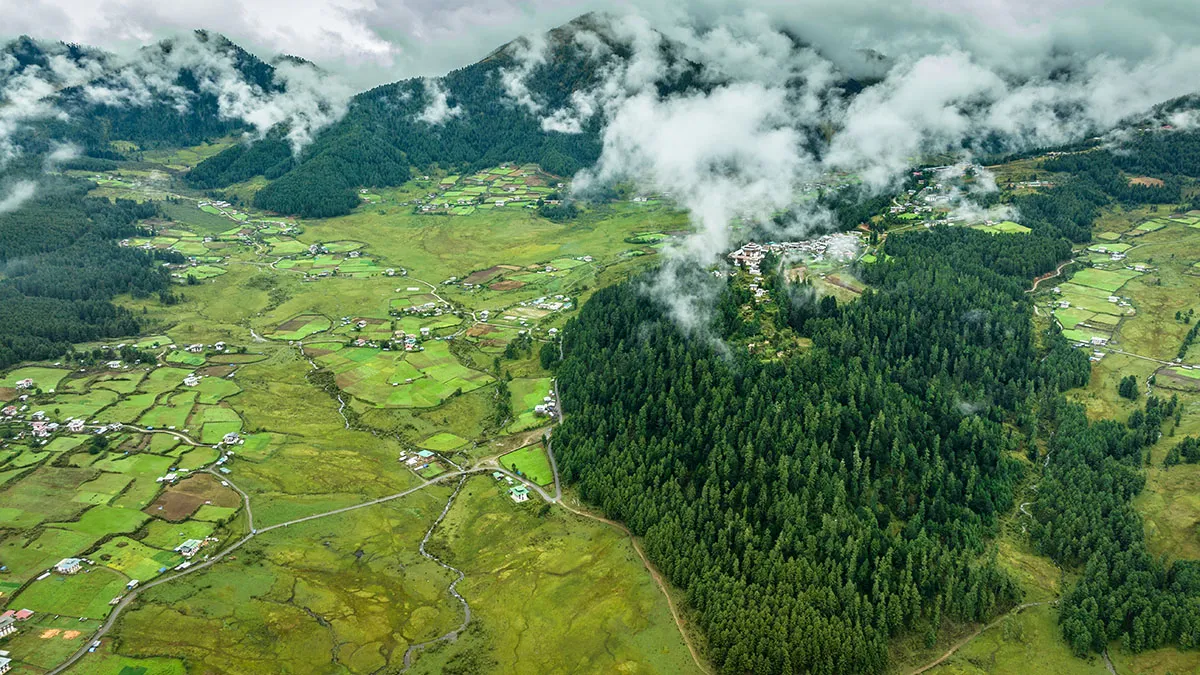
Road to Phobjikha
The scenic drive from Wangdue to Phobjikha Valley crosses Lawala Pass (3,360m) through beautiful forests of rhododendron and bamboo. The journey itself is a highlight, especially in spring.
Black Mountains National Park
One of Bhutan's largest protected areas, home to tigers, red pandas, and diverse birdlife. The park is accessible from Wangdue for day hikes or longer treks into pristine wilderness.
Radak Neykhang
A small but spiritually significant temple above Rinchengang, offering panoramic views of the valley and dzong. The short hike provides excellent photo opportunities.
Unique Experiences
- ✨ Visit the weekend market in Bajo for local produce
- ✨ Watch traditional bamboo craft production
- ✨ Explore Rinchengang village on foot
- ✨ Drive the scenic road to Phobjikha Valley
- ✨ Try local red rice and river fish dishes
- ✨ Visit during Wangdue Tshechu (autumn)
- ✨ Hike into the Black Mountains National Park
Practical Information
Getting There
Wangdue is 3.5 hours from Paro via Thimphu and Dochula Pass. Most visitors pass through en route to Phobjikha or Bumthang. The town of Bajo is the main stopping point.
Getting Around
Bajo town is walkable. A vehicle is needed for the dzong (short drive) and surrounding attractions.
Accommodation
Several hotels in Bajo town, ranging from budget to mid-range. More upscale options in nearby Punakha. Wangdue is often a lunch stop rather than overnight destination.
Weather
Lower altitude means warmer temperatures. Similar to Punakha with mild winters and warm summers. Monsoon brings rain June-August.