

Digital Detox: Why Bhutan is the Perfect Place to Disconnect and Find Peace
In a world of constant connectivity, Bhutan offers something increasingly precious: genuine disconnection. Discover why this Himalayan kingdom provides the ideal environment to step away from screens and rediscover presence.
Your phone has no signal. There is no WiFi in the farmhouse. The monastery you are visiting was built centuries before electricity existed. And somehow, instead of anxiety, you feel relief flooding through your nervous system.
This is Bhutan's unexpected gift to the hyperconnected traveler: permission to disconnect. Not as deprivation but as liberation. Not as primitive inconvenience but as sophisticated understanding of what humans actually need.
The Accidental Digital Detox
Bhutan does not market itself as a digital detox destination. The country has embraced technology thoughtfully, with mobile coverage in major towns and WiFi in most hotels. But the nature of Bhutanese travel creates natural disconnection that structured detox programs try to replicate artificially.
Mountain roads pass through valleys where signals cannot reach. Treks venture beyond any connectivity. Traditional farmhouses lack internet infrastructure. Even where connection exists, the slow pace of Bhutanese life discourages constant checking.
The result is hours, sometimes days, of genuine disconnection. Not because someone confiscated your phone but because the phone simply does not work here. The external excuse liberates what internal willpower struggles to achieve.
What Happens When You Disconnect
The first hours feel strange. Hands reach for phones that cannot help. The urge to document, share, and check persists even without possibility of satisfaction. This is withdrawal, and it reveals how deeply the habits have embedded.
Then something shifts. Without the constant pull of notifications, attention settles. The landscape that would have been photographed and scrolled past becomes actually seen. Conversations with guides and hosts extend beyond polite exchange into genuine connection. Time dilates as the urgent compression of online life releases.
By day three or four, most travelers report profound changes. Sleep improves without evening screen exposure. Anxiety diminishes without constant news consumption. Creativity stirs without the endless input stream. The mind, freed from processing endless information, begins processing experience instead.
This is not mystical transformation but simple neuroscience. Constant connectivity maintains stress hormones, fragments attention, and prevents the consolidation of memory and learning. Remove the stimulus and the nervous system recalibrates toward its natural baseline.
The Buddhist Framework
Bhutan's Buddhist culture provides unexpected support for digital detoxing. The dharma teachings that permeate Bhutanese society address attachment, distraction, and the monkey mind centuries before smartphones made these universal struggles.
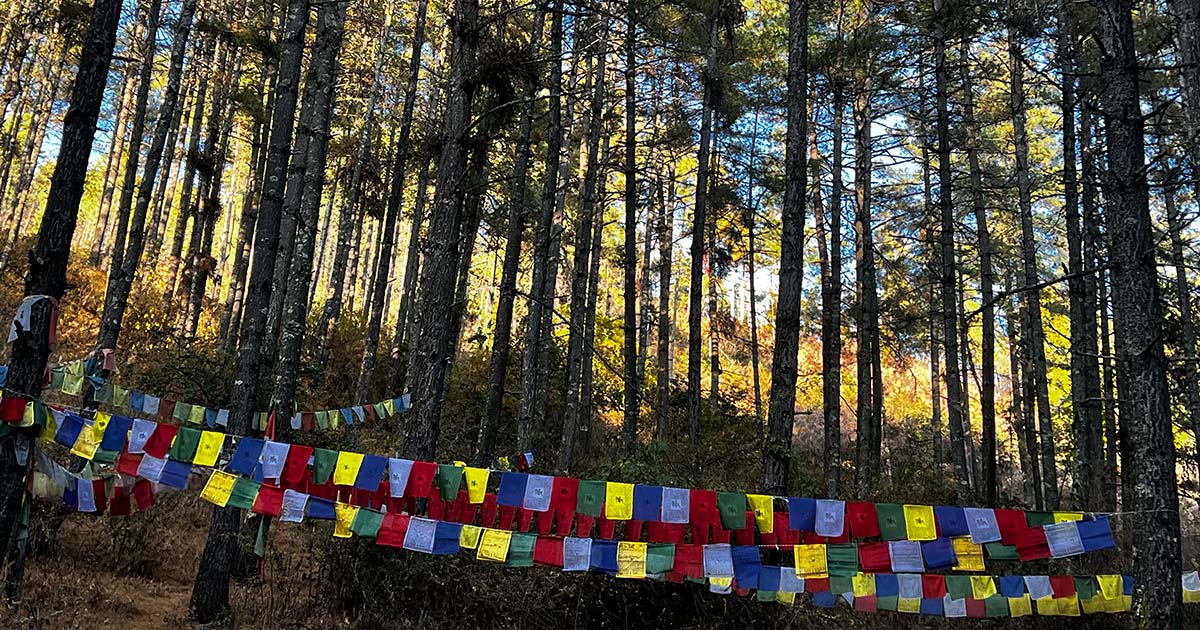
Monks practice meditation to train attention and reduce reactivity. Prayer flags remind passersby of impermanence and the limitations of material grasping. The pace of religious life, with its long ceremonies and patient prostrations, models a different relationship with time than productivity culture permits.
Visitors need not adopt Buddhist beliefs to benefit from this environment. Simply being surrounded by a culture that values presence over productivity, contentment over acquisition, and being over doing creates permission to inhabit a different mode.
Many travelers find themselves instinctively adopting local rhythms: waking with dawn light, walking rather than rushing, sitting in silence without needing to fill the space. The culture makes space for what hyperconnection squeezes out.
Designing Your Disconnection
While Bhutan naturally encourages disconnection, intentional choices deepen the experience.
Consider leaving one device at home. If work requires a laptop, perhaps the tablet can stay. If the camera must come, perhaps the phone becomes airplane-mode only. Each device left behind reduces the pull toward old patterns.
Communicate expectations before departure. Tell colleagues and family that response times will extend. Set out-of-office messages that establish genuine unavailability. The psychological freedom of knowing no one expects immediate response enables actual release.
Request accommodations without WiFi when possible. Many traditional farmhouse stays lack connectivity, offering the deepest immersion. Even within connected hotels, asking for a room distant from the router creates helpful friction.
Bring analog alternatives. Paper journals capture reflections that typing cannot match. Physical books fill evening hours without blue light. A deck of cards enables social connection without screens. Sketchbooks invite attention to visual details that photography rushes past.
Discuss intentions with your guide. Bhutanese guides understand that visitors seek something beyond sightseeing. Explaining your hope to disconnect invites their support. They can suggest activities, routes, and accommodations that enhance rather than undermine the intention.
The Challenge of Photography
Bhutan presents a particular dilemma: the landscapes and architecture are spectacularly photogenic, yet constant photography undermines the presence that makes travel meaningful.
One approach is scheduled photography. Perhaps the first and last thirty minutes at each site are for cameras. The time between is for pure observation, conversation, and experience. The constraint forces prioritization: what truly matters enough to photograph?
Another approach is quality over quantity. Rather than documenting everything, select a few images each day that genuinely capture something essential. The discipline of selection deepens seeing rather than replacing it.
Some travelers bring film cameras, whose limited exposures naturally constrain shooting. Others leave all cameras behind, trusting memory to preserve what matters. There is no single right approach, but conscious choice about the role of photography prevents it from consuming the experience it ostensibly preserves.
The Return Challenge
Perhaps the most valuable aspect of Bhutan's digital detox is what it reveals about normal life. Returning to connectivity after genuine disconnection exposes just how abnormal our normal has become.
The volume of notifications feels overwhelming rather than ordinary. The pace of information flow seems frantic rather than natural. The constant pull of devices appears for what it is: addiction maintained by powerful interests profiting from our attention.
This awareness creates opportunity. Many travelers report changing relationships with technology after Bhutan. Not abandoning devices, which modern life rarely permits, but using them more intentionally. Notification settings get adjusted. Phone-free times get established. The brief taste of disconnection creates appetite for more.
Some visitors establish regular digital sabbaths upon returning home. Others create phone-free zones in their living spaces. A few make more dramatic changes, restructuring work or life to reduce dependency on constant connectivity. The Bhutan experience becomes reference point for different possibility.
Beyond Individual Detox
Bhutan's relationship with technology offers lessons beyond personal digital hygiene. The country adopted television and internet later than most nations, after deliberate consideration of benefits and risks. This conscious approach contrasts sharply with the headlong embrace most societies made.
The result is a population that uses technology without being consumed by it. Smartphones are common in cities, but so is face-to-face conversation. Farmers check weather forecasts online while maintaining traditional agricultural knowledge. Monks use WhatsApp without abandoning meditation practice.
This integration demonstrates that technology and presence need not conflict. The problem is not devices themselves but the unexamined adoption of attention-exploiting platforms and always-on expectations. Different choices about technology remain possible, as Bhutan's example proves.
Coming Home Different
The peace found in Bhutan need not stay in Bhutan. The insights about attention, presence, and genuine connection are exportable. The practices that support disconnection work anywhere.
But the initial experience benefits from Bhutan's unique environment. The physical disconnection that geography and infrastructure impose removes willpower from the equation. The cultural permission to slow down overcomes internalized productivity pressure. The beauty that commands attention makes presence rewarding rather than merely virtuous.
This is perhaps Bhutan's most unexpected offering to modern travelers: not just spectacular sights and ancient culture but the increasingly rare experience of undistracted presence. In a world that profits from capturing and fragmenting attention, Bhutan remains a place where attention can rest, integrate, and remember what it feels like to be whole.
That restoration, more than any photograph or souvenir, is what travelers carry home from the Land of the Thunder Dragon.